

Are You Ready to Unveil the Secrets of Healthy Cooking Spices?
In contemporary culinary practice, spices tend to be perceived as something secondary, an unappealing bottle taken off a supermarket shelf in order to make food look appetizing. But in the eyes of those who take both food and seasoning seriously, the place where they come from becomes paramount.
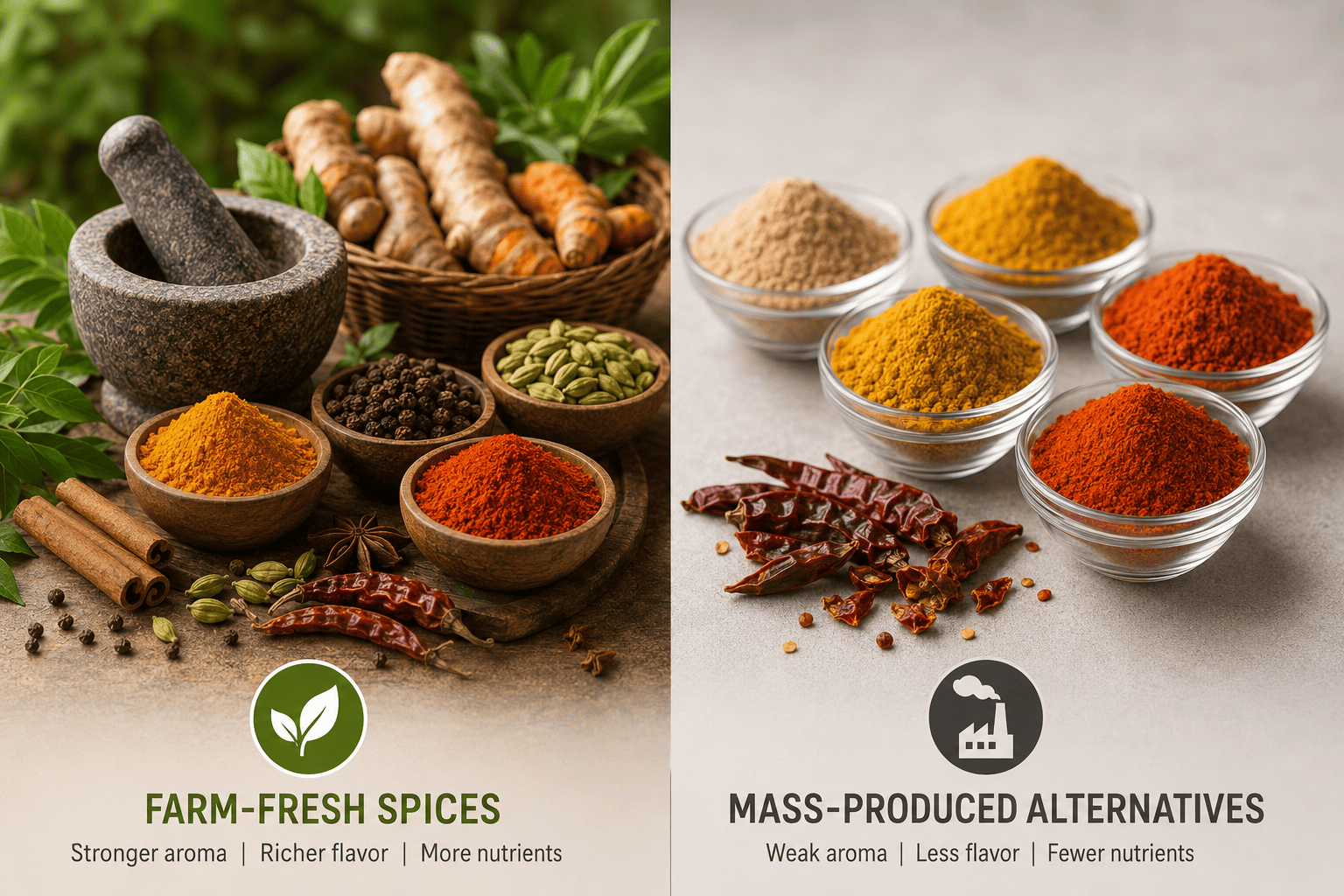
With the rise of healthy food spices, one discovery stands out clearly: store-bought spices are inferior to the ones growing on a farm. Without the oils that make them what they are, stuffed with additives, aged for years, factory spices are not what you should rely on.
For those who understand the value of healthy cooking spices, only one path remains to get maximum benefit from their use. This is why farm-grown spices should be preferred to factory-produced ones in every way possible.
Spice Potency and Oils
The key difference between farm fresh spices and industrial spices comes down to the amount of volatile oils that the plant has. Volatile oils give the plant its aroma as well as the healing benefits.
The Dangers of Processing
Many industrial spices go through a processing stage involving a heating process that burns away the volatile oils. Also, in order to reduce costs, many spice companies remove the oil from spices and sell the oleoresin to perfumes or supplements before grinding them up and selling them in grocery stores.
Farm Fresh Spices
If you use farm-fresh healthy cooking spices, you will usually find that they are either stone ground or cold pressed. The reason for this is that the process retains the compound structures in the spices, such as the piperine in pepper that aids in nutrient absorption.
Pure or Filler? What Is In The Jar?
Unless you buy your spices from the Vanatva farmers themselves, chances are that you are getting a cocktail of all sorts of other additives. This includes the use of flow agents or fillers that help prevent clumping during processing in large silos.
Anti-Caking Agents: Sodium aluminosilicate or silicon dioxide might very well be present.
Fillers: Mass produced turmeric can often be stretched with cornstarch. Sometimes worse, turmeric is colored by adding lead chromate for extra yellow color.
Pesticides: These spices come from large agricultural operations where synthetic pesticides are used extensively. As such, they leave traces of pesticides in the product.
Sourcing your own spices takes out the intermediary and thus all the mystery.
Specific Healthy Cooking Spices Benefits
Spice freshness does not only pertain to how it smells, but rather refers to its biological activity. Let us consider two highly effective spices that lose their effectiveness in mass production.
Turmeric Gut Benefits
Freshly picked and dried turmeric is packed with biological power when it comes to improving one's gut health. There are numerous benefits of fresh turmeric in terms of the digestive tract. These include reduced inflammation of the intestines, maintaining gut flora balance, and soothing stomach lining irritation. With the high content of curcumin (as in farm-fresh turmeric), turmeric serves as an effective prebiotic stimulating the growth of good bacteria in the gut.
Cinnamon Benefits on Skin
While we usually think of cinnamon as just another spice for baking pastries, cinnamon has excellent antimicrobial and antioxidant properties that are highly useful when applied on our skin. Moreover, the cinnamon found in stores and markets tends to be a Cassia cinnamon type that contains too much coumarin which is toxic in high amounts.
Instead, fresh Ceylon cinnamon is much better for skin care. Its advantages include:
Anti-acne Treatment: It has antibacterial properties that make it helpful in fighting acne breakouts.
Boosts Collagen: Cinnamon can increase blood circulation to the skin’s outermost layer resulting in plumping.
Antioxidant Properties: It combats free radicals which lead to premature aging.
The Flavor Profile: Healthy Cooking Spices
If you have only ever used mass-produced spices, your first taste of farm-fresh alternatives will be a revelation.
Spice | Mass-Produced Profile | Farm-Fresh Profile |
Turmeric | Bitter, dusty, slightly metallic. | Earthy, floral, with a gingery snap. |
Cinnamon | Harsh, spicy-hot, one-dimensional. | Sweet, delicate, complex, and woody. |
Cardamom | Faintly herbal, often dry. | Intense menthol, citrusy, and deeply aromatic. |
Cumin | Flat, vaguely smoky. | Nutty, pungent, and incredibly savory. |
Ethical and Environmental Impact
Not only does consuming spices improve your health, but purchasing directly from the farmer contributes to the "health" of the environment and local community.
Equitable Pay: Purchasing spices straight from the farmer means that more of the payment you make is going straight into the pocket of the individual who planted the spices themselves.
Regenerative Farming: Smaller farmers tend to employ regenerative farming methods, such as inter-cropping and organic composting, thus ensuring a rich diversity of flora in the area.
Lower Carbon Footprint: Industrial spices usually travel through several continents before ending up in stores or restaurants around the world.
Identifying and Storing of Healthy Cooking Spices
Changing your diet to incorporate healthy spices will need you to have some level of “spice literacy.”
Check out the “Harvest Date”
The expiry date on spices does not indicate how long the spice can remain fresh. It only indicates when the spice expires legally. You should eat the spice before six to twelve months from its harvest date.
Ground vs. Whole
When buying spices, try to avoid ground spices. Instead, get whole spices such as whole peppercorns and grind them to powder. The outer shell of a whole spice works like a storage container for the oils.
Tips for Storage
Keep Away from Light: Keep your spices away from any source of heat and light. These elements will affect the quality of the spices and make them bitter.
Dry Storage: When using spices, never pour them straight from their containers over a pot that has been boiling. This allows moisture into the spice, making it bitter.
Bottom line
The value of farmers can even be found in every ounce of seasoning that we use. By opting for farm-fresh Vanatva healthy cooking spices, we not only enhance the taste of our meals but we also pay homage to the traditional value of spices being medicine. It is the freshness of these spices and their potency that makes them effective.
When you need more spices next time, avoid the mass-produced aisle in your grocery store and head to the local farmer's market or search for an authentic farm-fresh source of spices online.
FAQs
Q1. Why do fresh healthy cooking spices coming from farms cost more?
Because you are buying pure products, not some filler, which are cultivated using more sustainable, intensive agricultural techniques, you pay for what they are worth.
Q2. How can I tell if my turmeric powder is pure?
Perform the "water test". Put a spoonful of turmeric powder in warm water. Good-quality products will sink to the bottom, while the water will be clean. Any cloudiness or yellow color in water means there are dye residues or fillers used in the mixture.
Q3. Can I grow my spices healthy for cooking?
Yes, many spices like ginger, turmeric, and coriander are easy to grow in home conditions or even in big pots if you have enough light.
Q4. Is the color of spices an indicator of their freshness?
Yes, most spices should be colored brightly – for instance, cinnamon shouldn't be pale gray but deep red-brown; paprika shouldn't have any signs of oxidation like being brown.
Q5. How can I buy spices directly from farmers?
Purchase through certified companies offering "direct trade" or find cooperative groups selling produce from specific farms.