
Golden Honey Elixir: Why Prefer Forest Honey Over Regular Honey
Honey was always valued not only for its unique taste but as a potent medicinal substance for thousands of years. Nevertheless, with the development of industrial farming, regular honey sold in most supermarkets became nothing compared to wild substances obtained by our ancient ancestors. And here comes forest honey, an extremely rich in nutrients natural honey that attracts more and more consumers.
However, why should one choose wild forest honey when there are many types of clear honey available? There are several reasons starting from its natural sources and up to the incredible antioxidant value.
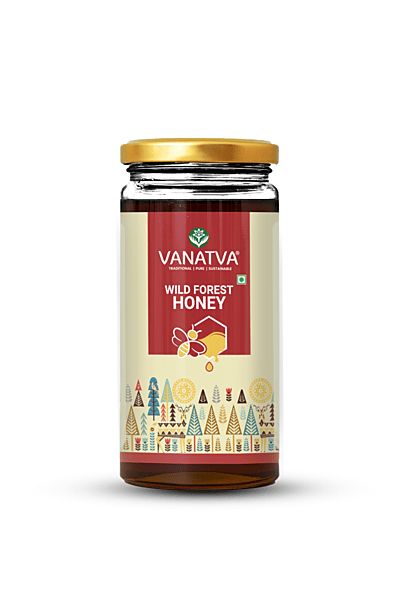
In this article, you will find out about three key advantages of choosing Vanatva wild forest honey.
Superior Antioxidant and Polyphenol Composition
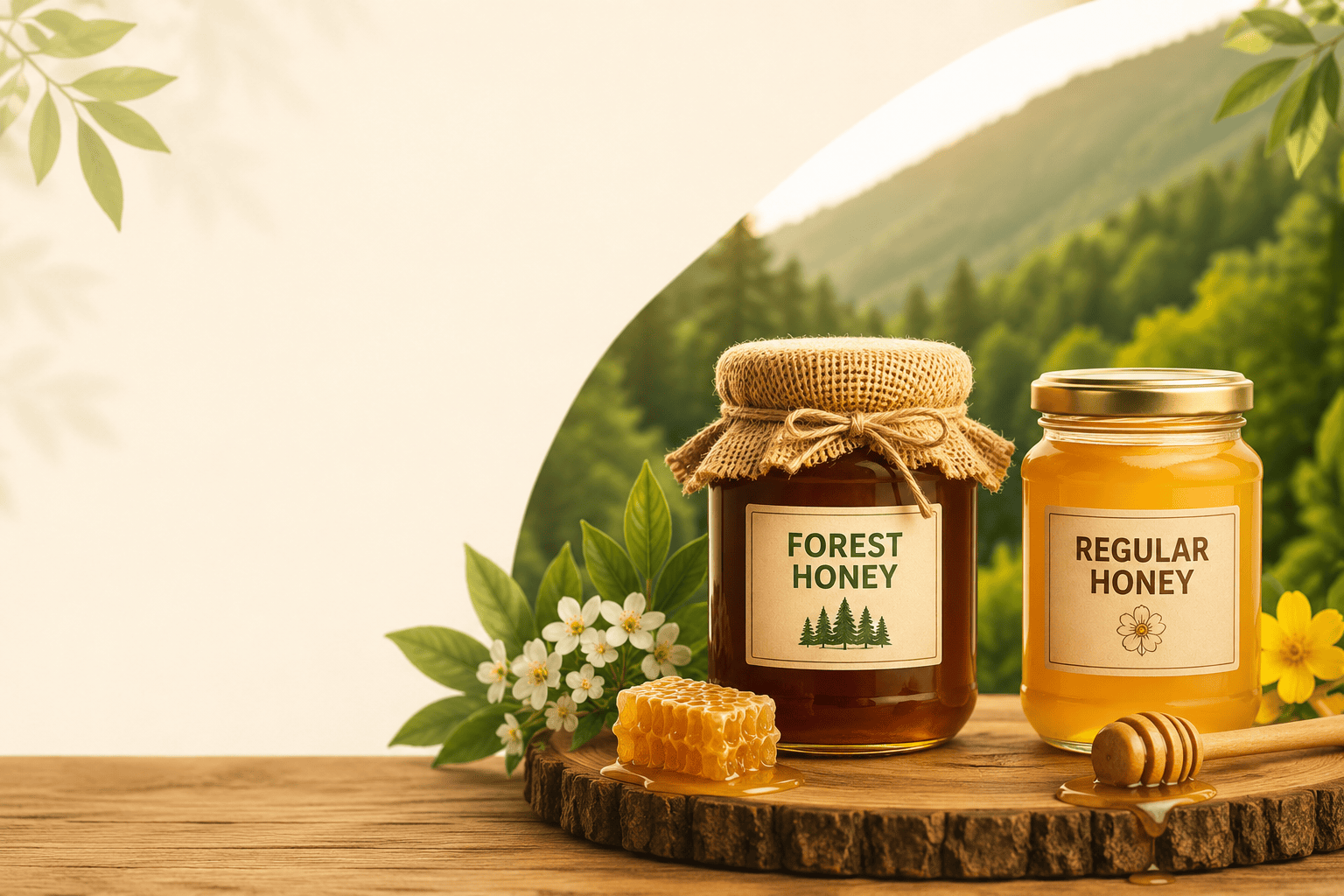
One of the first and most evident differences between raw honey collected from the forest and conventional honey is its color. Unlike common honey, forest honey varies from dark amber to near-black coloration. The darker the substance is, the more power it holds in the realm of nutrition.
Science Behind Dark Honey
Scientific studies have found that darker honeys usually include much higher content of phenolic substances and flavonoids. According to research, wild forest honeys include from three to four times more antioxidant properties compared to light floral honeys, including Acacia or Clover varieties.
Polyphenols: They are the micronutrients consumed in plants. The unique composition of forest honeys includes such polyphenols as gallic acid and caffeic acid.
Protection against Free Radicals: Being enriched with antioxidants, the fresh honey from forests helps eliminate free radicals that cause oxidative damage leading to aging processes and development of chronic conditions.
Unlike monofloral conventional honey produced from one crop using pesticides, the natural forest variety comes from various types of trees, shrubs, and medicinal herbs. As a result, you receive a wide spectrum of phytochemicals protecting you against harmful agents.
Greater Mineral Concentration and Vanatva "Honeydew" Nutrients
Many find themselves in a state of shock when told that most of the forest honeys consumed in their homes are in fact, "honeydew honeys". Traditional honeys are made using flower nectar while "forest honey" is produced when forest bees collect the "honeydew", a nutrient-rich sugary secretion from aphids that feed on the sap of the Oak, Fir and Beech trees.
Importance of Honeydew
The unusual history of forest honeys makes the nutrients they offer vastly different compared to those of blossom honeys:
Mineral Composition: Unprocessed and raw forest honey is extremely high in vital minerals, especially Potassium, Magnesium, Iron and Manganese. In scientific research, forest honey has been found to contain up to five times more minerals than its counterparts.
Oligosaccharides: Forest honeys boast higher amounts of oligosaccharides, which are complex sugars. They are considered "prebiotic" due to their ability to feed the "good" bacteria in the intestinal flora.
Glycemic Index Difference: Forest honeys, because they aren't based solely on nectar, have a lower Glycemic Index compared to some of the overly processed honeys out there.
Forest fresh honeys are not just sugar but rather, an organic mineral supplement straight out of the forest.
Improved Antibacterial and Immune Supporting Effects
Though all honey types contain some antibacterial effects due to the low pH level and hydrogen peroxide, raw honey has an improved effect in terms of the forest variety.
The Advantages of "Wildness"
Most of the common honey types undergo heat treatment and ultra-filtration, making them look clearer and keeping them non-crystallizing. However, such treatment destroys enzymes and pollen, two of the strongest natural immune stimulants.
Forest honey, on the other hand, keeps everything "alive." In other words, minimal processing preserves:
Glucose Oxidase – an enzyme that ensures the presence of hydrogen peroxide and active antimicrobial effect of the honey.
Propolis – known as "bee glue," it is a resinous mixture obtained by bees from buds of trees. It is famous for being antifungal and anti-inflammatory.
Pollens of Environment – consumption of natural honey allows one to take advantage of small amounts of wild pollens contained in forest honey. Such consumption is often recommended by experts for the purpose of building up tolerance to environmental allergens.
Comparison of honey from forests and those purchased from the market reveals that honey from forests has much higher "Minimum Inhibitory Concentrations" against microorganisms, and therefore should be preferred when it comes to treating sore throats and other ailments.
Forest Honey vs. Regular Honey
Feature | Regular Honey (Market) | Raw Forest Honey |
Source | Single-crop floral nectar | Wild trees, herbs, and honeydew |
Processing | High-heat pasteurization & filtration | Raw, cold-extracted, unfiltered |
Color | Light amber to pale yellow | Dark amber to near-black |
Mineral Content | Low | High (Potassium, Magnesium, Iron) |
Antioxidants | Moderate | Very High |
Taste | Simple sweetness | Complex, earthy, woody, malty |
How to Recognize and Use Vanatva Forest Fresh Honey?
For optimal utilization of genuine honey harvested from the forest, it is important that the honey is clearly labelled "Raw", "Unfiltered", or "Wild-Crafted". In contrast to floral honey, forest honey contains many minerals, making it liquid and slow to crystalize, thereby suggesting its genuineness.
Incorporating into Your Lifestyle
Morning Tonic: Incorporate a teaspoon of raw forest honey to your morning glass of warm water with a little bit of fresh lemon juice to help improve mineral absorption and digestion.
After Work Out: Use the high content of electrolytes found in forest honey to replenish your body with depleted glycogen stores after exercising.
Immune Booster: Consume a spoonful of raw forest honey when experiencing soreness in your throat in order to prevent infections.
Bottom Line
While ordinary honey can conveniently substitute refined sugar in terms of health, Vanatva forest honey is more than just that.
Selecting raw forest honey means making an ecological choice while promoting ethical harvesting of this product from the wild ecosystem. Additionally, forest honey has better nutritional qualities than ordinary honey.
Thus, when choosing between two types of honeys next time around, opt for the natural one.
Frequently Asked Questions
Q1. Is forest honey better for weight loss?Yes. Wild forest honey has a lower Glycemic Index and higher prebiotic content than regular honey, leading to more stable blood sugar levels and longer-lasting fullness.
Q2. Why is forest honey darker than ordinary honey?
Its deep color comes from tree sap and honeydew sources. This indicates a much higher concentration of minerals and antioxidant polyphenols compared to light floral nectars.
Q3. Does raw forest honey ever expire?
No. Raw forest honey is self-preserving and lasts indefinitely. Crystallization is a natural sign of pure honey benefits, not spoilage.
Q4. Can I give wild forest honey to infants?
No. To avoid the risk of botulism, never give any honey to infants under 12 months old. It is perfectly safe for children over one year and adults.
Its deep color comes from tree sap and honeydew sources. This indicates a much higher concentration of minerals and antioxidant polyphenols compared to light floral nectars.